Ugmonk
Ugmonk
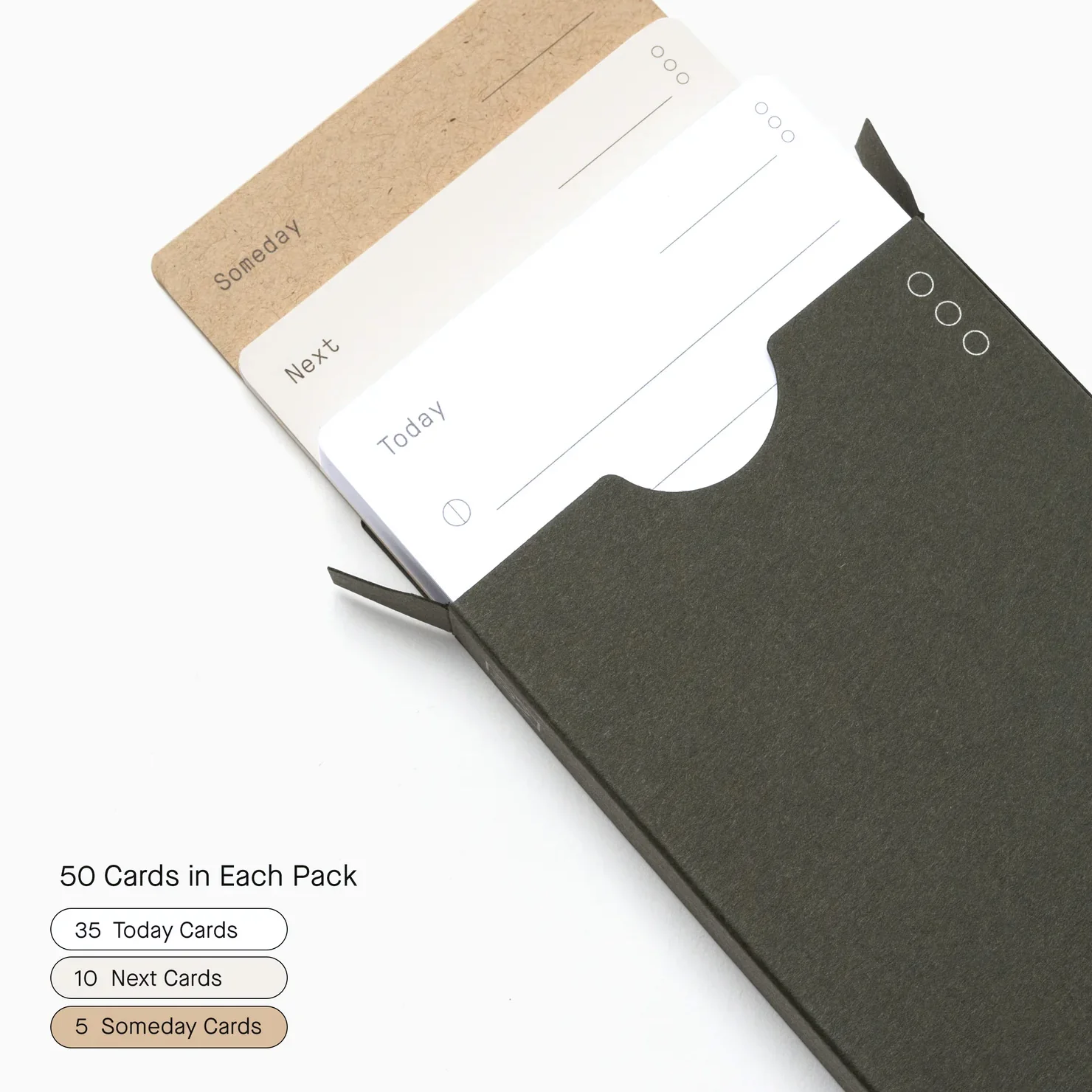

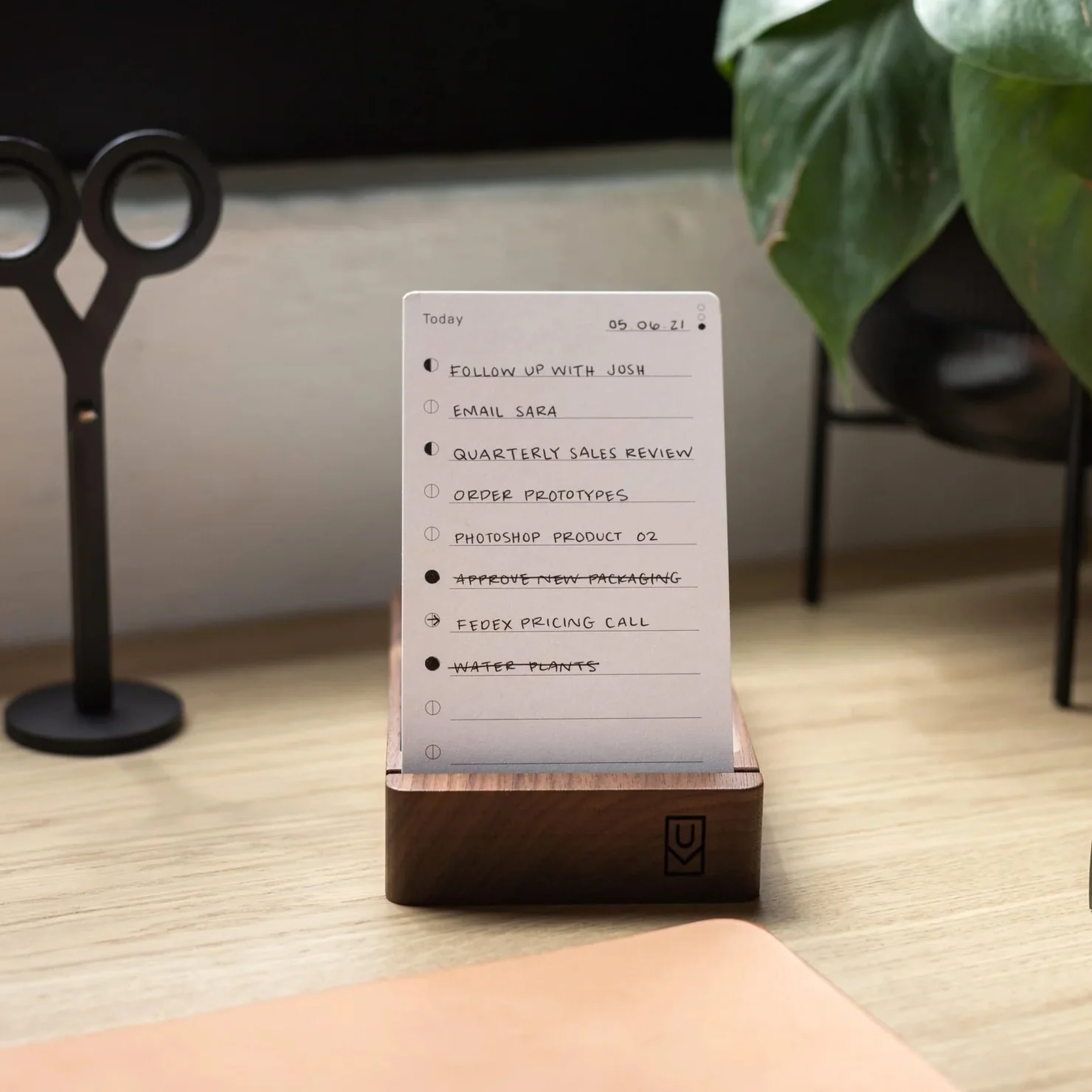


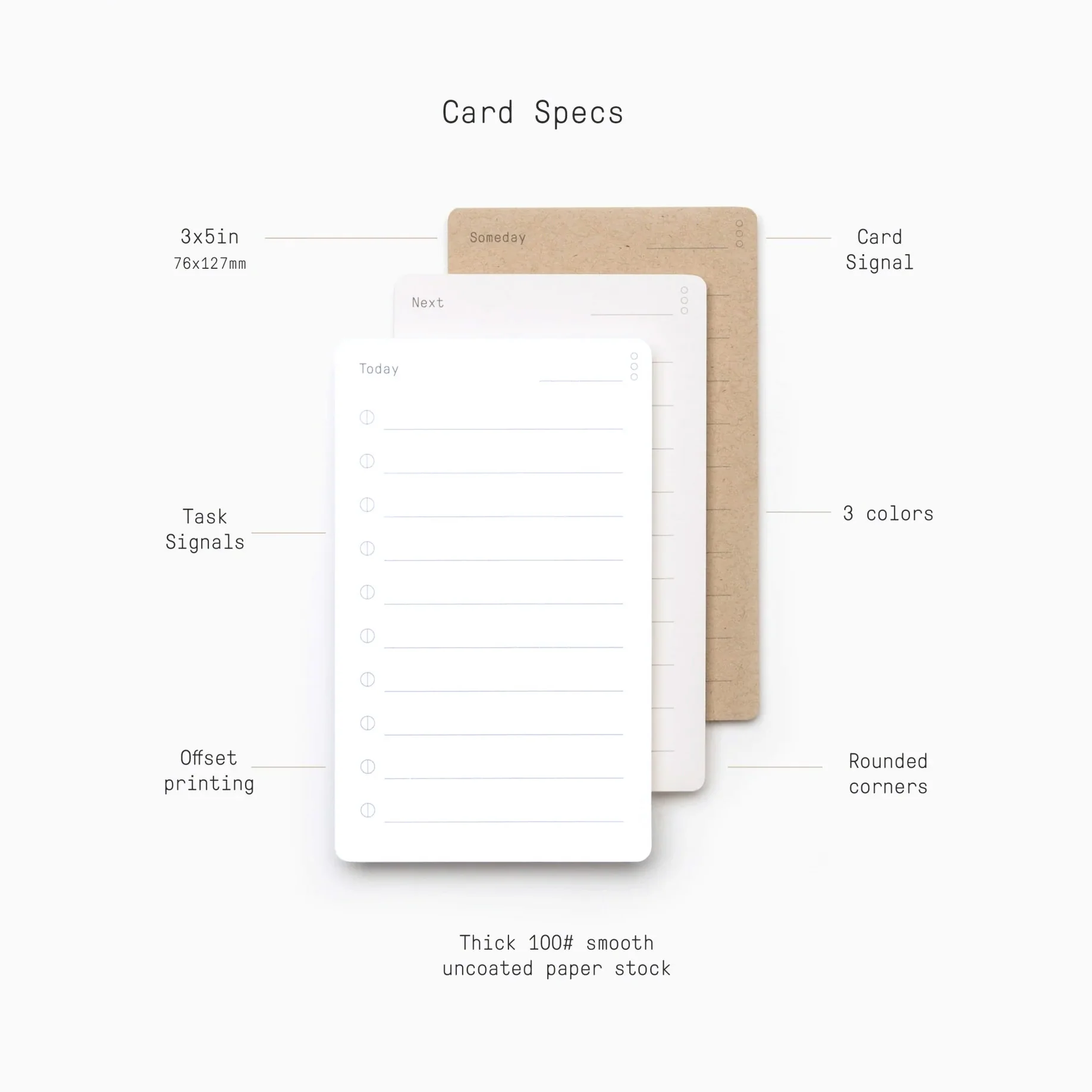

Ugmonk Analog is a physical productivity system created by designer Jeff Sheldon as a companion to digital task management tools. The system uses three types of printed task cards — Today (up to 10 tasks for the day), Next (tasks for tomorrow), and Someday (longer-horizon items) — held in a precision-crafted walnut, maple, or steel card holder that sits on your desk. The card holder keeps the Today card permanently visible in front of you throughout the workday, creating a physical anchor for daily prioritisation. The cards are printed on premium 100lb uncoated paper with a dot grid on the back, and the system forces a decision each morning: what are the 10 things that actually matter today? The constraint is intentional — you cannot fit everything on one card, so prioritisation is required. For ADHD users, the physical, visible, always-present card provides an external working memory cue that digital task managers buried in apps cannot match. For autistic users, the consistent morning ritual and the clear physical system create predictable daily structure. For dyslexic users, 10 handwritten items is far more manageable than a dense digital list. Available in standard ($62) and premium ($135) configurations with different card holder materials.
Features
A physically visible Today card on your desk serves as a constant, unmissable external working memory cue that no digital app can replicate
Constraining the day to 10 tasks forces the prioritisation that ADHD brains struggle to do independently — you cannot put everything on one card
Three card types — Today, Next, Someday — externalise the full task horizon without cognitive overhead
Premium materials (walnut, maple, or steel) make the system tactilely satisfying — increasing the likelihood of actually using it
For ADHD, the physical visibility directly compensates for out-of-sight-out-of-mind task forgetting; autistic users build a consistent, predictable morning ritual around the card; dyslexic users write 10 items by hand rather than navigating complex digital interfaces; dyspraxic users have a clear, simple single-surface planning system